Trees, Seasons & Shining a light on Farming Communities: Kinder Bilingüe

Jun 4, 2026

This video features Maestra Consuelo teaching dual language, Spanish & English, to Kindergartners in a rural farming community in Washington State. Maestra Consuelo spent three years modifying the weather unit to incorporate her dual-language community and better connect to the stories of the families living there. She blends the unit on trees and the needs of plants with the seasons, as students observe a tree in the playground throughout the year and discuss how and why it changes. She incorporates family stories of tending to fruit trees as a way to “shine a light” on the knowledge of plants and seasons in the community and the vital role families play in caring for trees and providing fruit for the community and the world. Washington state is the top producer of apples in the country. The video also highlights multiple examples and strategies of translanguaging as a way of honoring students and families knowledge, identities, and ways of being.

  • 0-10:18 Teacher description of the unit and examples of student work
  • 10:18-22:12 Sensemaking conversation about why the tree in the school yard changes over time
  • 22:13-25:19 Outdoor exploration
  • 25:20-38:05 Sharing and sensemaking with family tree stories

Equity

Nature-Culture Relations & Ecological Caring

Too often in classrooms, science is presented as equations and facts separate from human lives and culture. Nature is a part of human existence, and vice versa. We care for trees, and they care for and provide for humans and multiple species. Meaningful, real-world phenomena show the interconnected relationships among place, nature, and culture. (Bang & Marin, 2015; Learning in Places Collaborative. 2020)

Culture, Families, & Communities as Rightfully Belonging

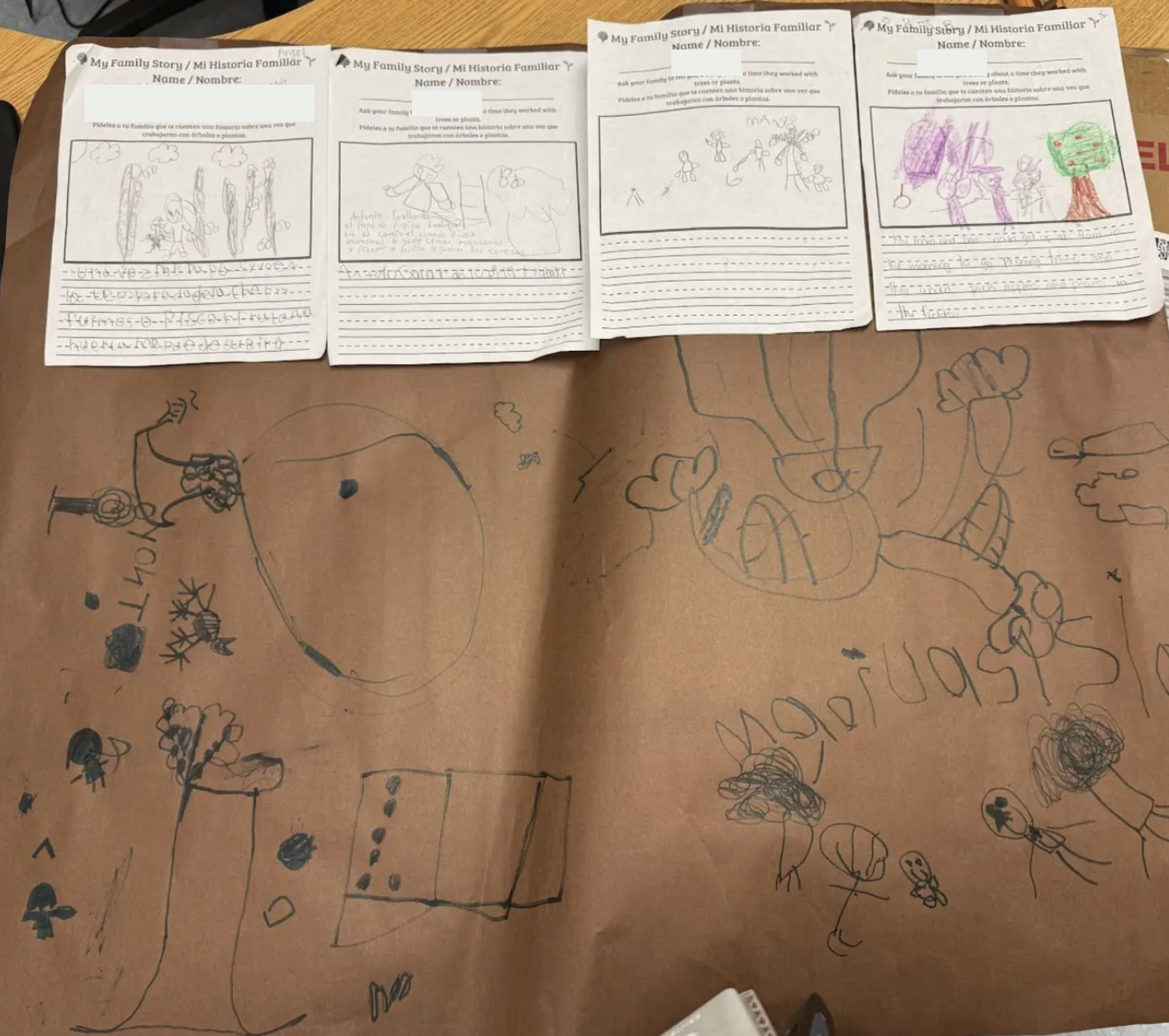
BIPOC communities’ rights and cultural ways of knowing should be at the center of learning. This Kinder classroom provides strong examples of the teacher sharing her background story of growing up with parents who worked in the farming community, as a way to invite stories from families. On parent night, families found and celebrated their stories posted in the classroom.

Broadening Languages of Science

Multilingual students’ ways of communicating provide value and points of leverage to expand science discourses and sensemaking. Science educators must recognize the linguistic value of all of their students and the communities they come from. Diversity in language reflects diversity in thinking and opens the door for deeper learning. (Suarez, NGS Navigators, 2019; Suarez, 2019).

Red poster with family stories and kids drawings brown poster with family stories and students drawingsgreen poster with family stories and students drawings


Research


Related Posts

This site is primarily funded by the National Science Foundation (NSF) through Award #1907471 and #1315995