
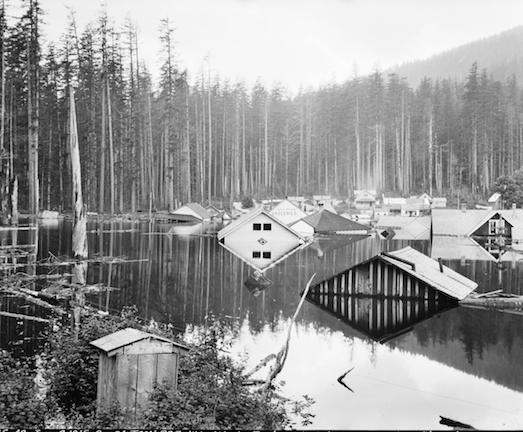
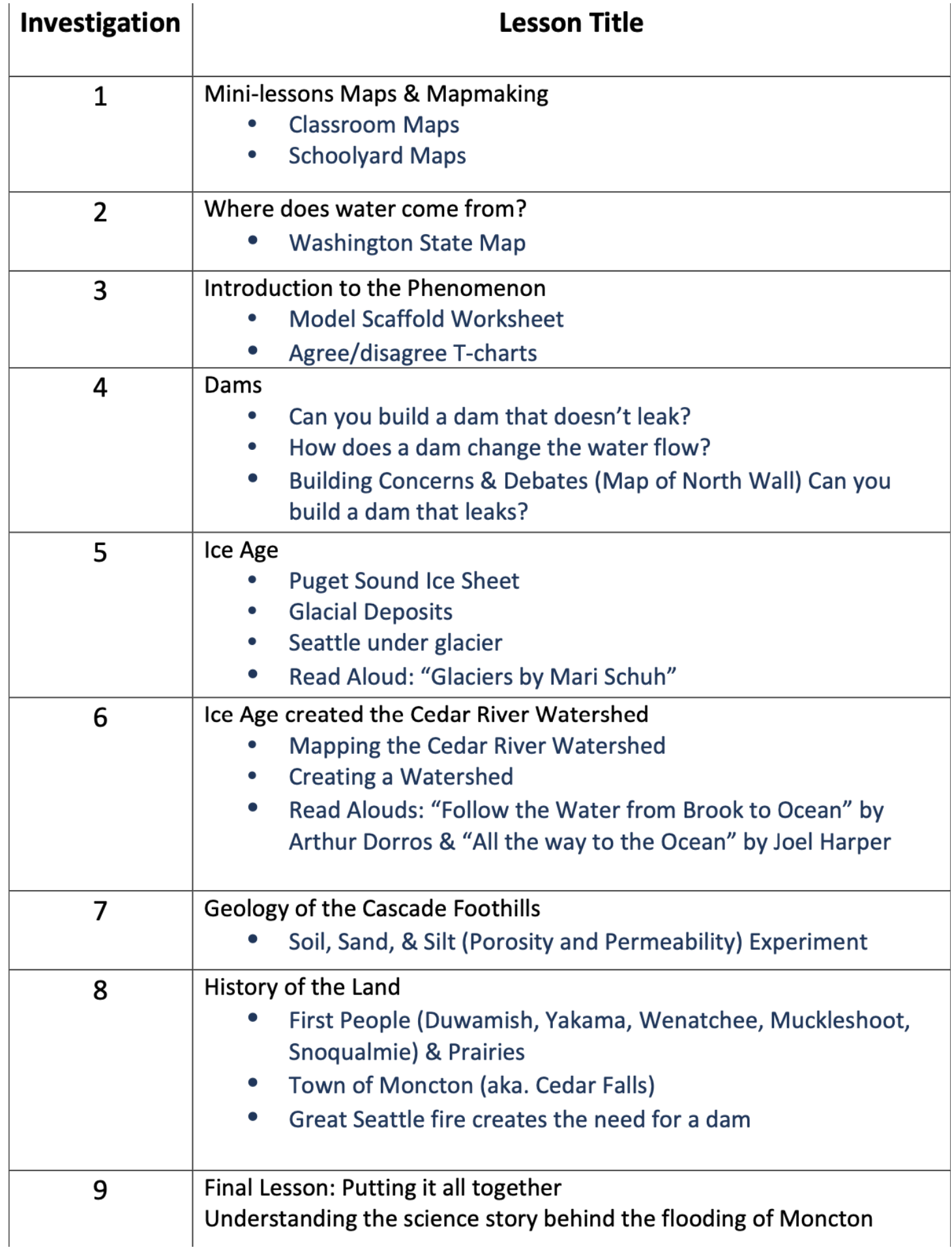
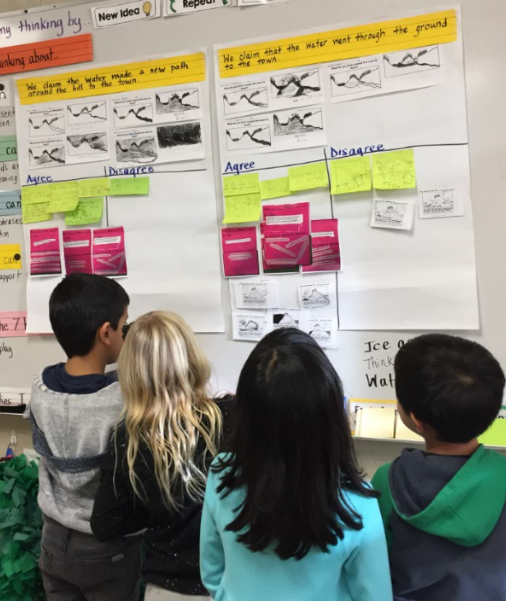
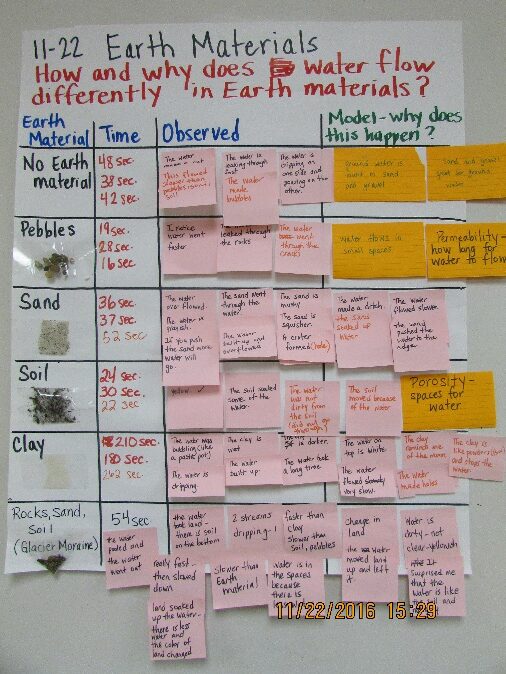
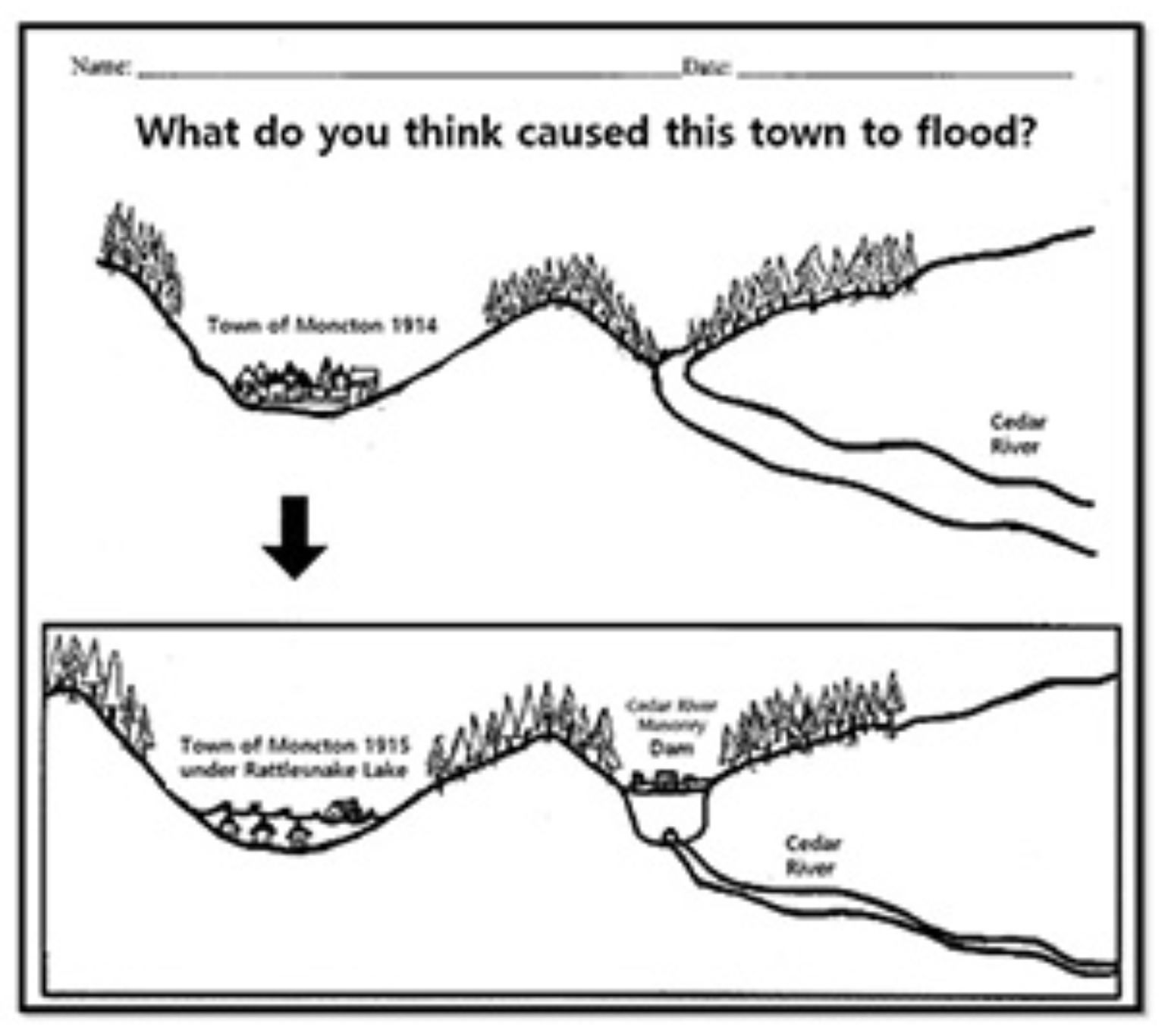
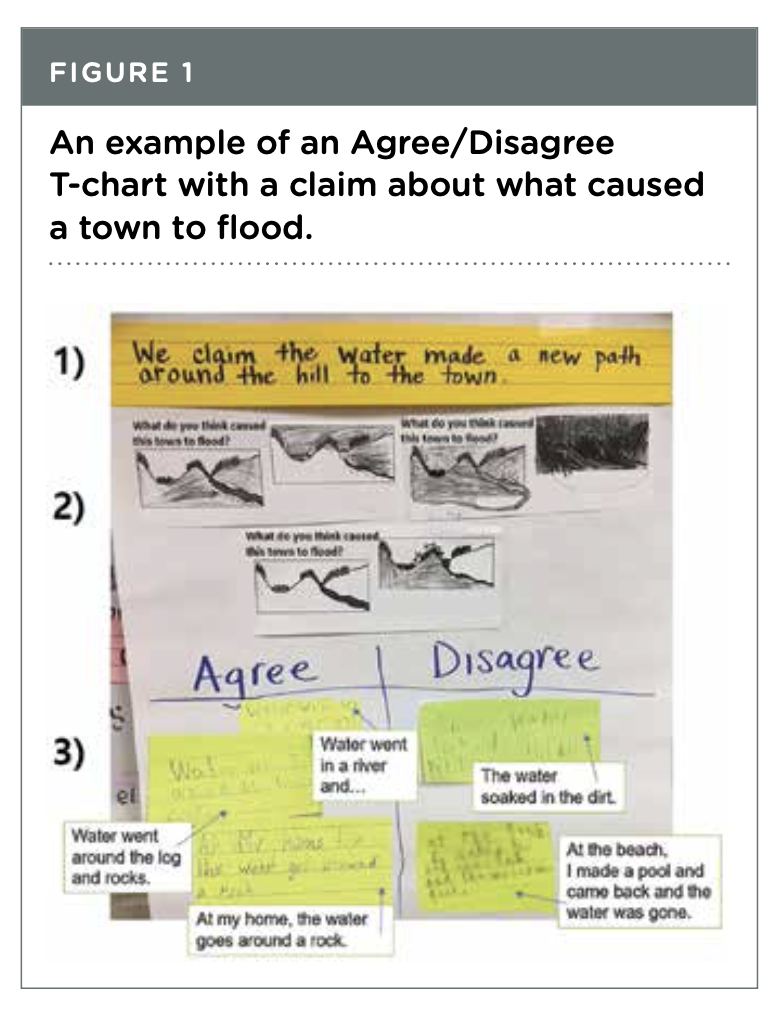
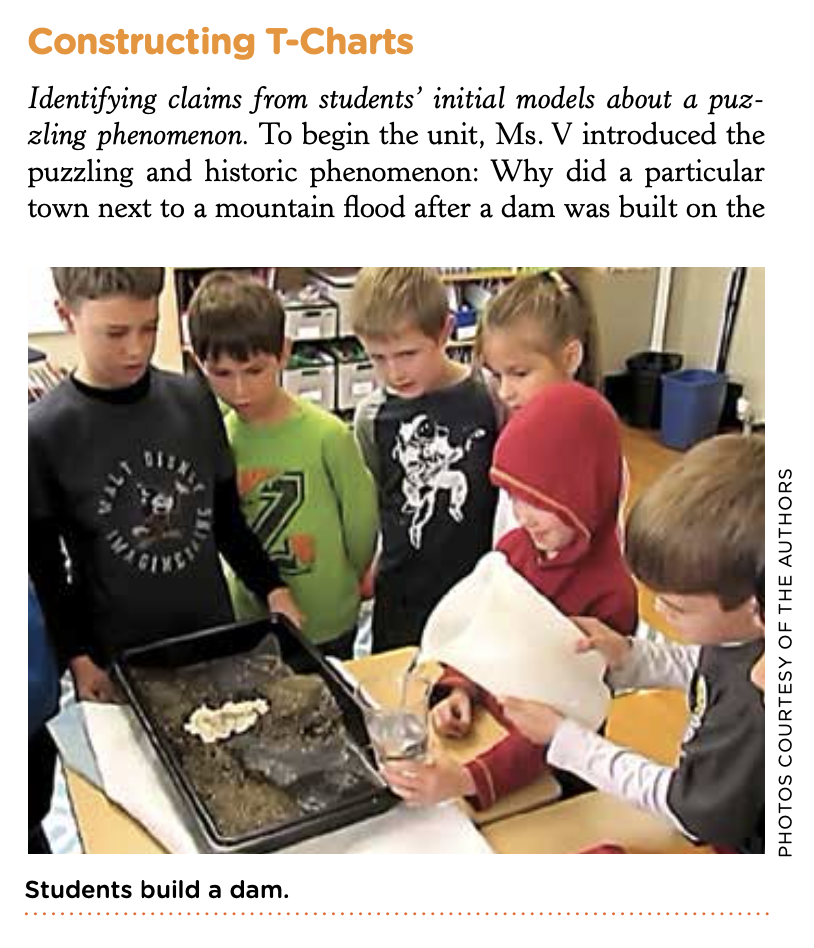
In this 2nd grade unit, students construct their explanations about a puzzling and historical phenomenon: Why did a town next to a mountain (the town of “Moncton”) flood after a dam was built on the opposite side of the mountain? Throughout the unit, students engage in a number of activities (readings, investigations, and watching videos) to gather evidence and revise their models and explanations about how and why the town flooded. Students can learn about how dams affect water flow and landscapes, ice age and glacial moraines, how the structure and properties of different earth materials can affect water flow, and how water can change the shapes and kinds of land quickly or slowly. Written by Michelle Salgado, Jennifer Richards, Soo-Yean Shim, and Kitten Vaa in collaboration with the University of Washington’s Ambitious Science Teaching group and Highline Public Schools, with funding from the University of Washington, Highline Public Schools (Sub-award from the Department of Education, Race To The Top grant and the National Science Foundation (DRL 1417757).


Multilingual Science Theater Example
Using Science Theater as a format for student explanations.


 This site is primarily funded by the National Science Foundation (NSF) through Award #1907471 and #1315995