To build a classroom of interdependence and care, teacher Emma adopted various instructional designs and considerations that centered on linguistic and disability justice. In the following paragraphs, you’ll learn how she honored and represented her multilingual students’ and families’ home languages, how she invited and valued family input, and how she normalized multilingualism and disabilities in a positive and agentive way.
Multilingual Representations in Science Lessons
One of our science units throughout the year centers around butterflies, and during the first lesson of that unit, I displayed a photo of a butterfly with the word butterfly in a variety of students’ languages listed around it (see picture below). My multilingual students lit up as many of them recognized their home language, even if they couldn’t read the word. Butterfly was a common enough word that many students were able to teach us how to pronounce it in their languages as well. With more complex vocabulary, I have sent home slips of paper asking families to write the word in their language and teach their students how to say it. Then we display those papers in the classroom, and students get the opportunity to teach their classmates how to say the word in their home language.

Building a Multilingual Classroom Library: School-Home Connections
Most recently, I used funding from our PASTEL research project to purchase multilingual books for my classroom library. When I started teaching three years ago, I was able to have a bin of multilingual books in Spanish in my library, which has been a powerful tool for my Spanish-speaking students. Those books have allowed students to access their home language in our classroom, and I have even been able to send them home with students to borrow so their families could read with them in their home language. I have been wanting to expand this collection to be more inclusive of the variety of home languages I have represented in my school community, so this year, I had each of my multilingual students help me select a book for our classroom library in their home language. I added students’ names to the inside cover so my future classes can know who helped to select that book for our classroom. I hope to expand this section of our library each year with new languages and students so that every student can have a book in our classroom that represents their home language and allows them to connect that piece of themselves to school.
Beyond Racial, Cultural, and Linguistic Representations: Disability Justice
I noticed, however, an area where there was a gap in these lessons. Although I saw lessons ranging in racial, cultural, and linguistic representation, I had not seen a lesson centered around disability justice and activism. I used this as a jumping-off point for my lessons, creating a unit centered around information and acceptance of a variety of dis/abilities. Here is the link to my slide deck. I used these slides in a kindergarten classroom, but I believe it can be modified to meet your students’ current thinking and needs.
Things to note
- Start by having a conversation with the parents of your students with disabilities and potentially with those students as well, depending on grade level – check in with them about any suggestions they have and make sure they feel comfortable with this material being taught (we also emphasized many times that students would not be singled out and would be explicitly told not to single others out)
- Be aware not to stereotype disabilities or frame them with a deficit mindset (disabilities are not a bad or sad thing)
- Try to center the voices of people with disabilities as much as possible
- I would highly recommend following this format (information, video of a person with this disability, and a read-aloud) and including lessons for any other disabilities you may have represented in your classroom
- Just be very positive, kids pick up on your energy, and if you are excited and passionate about this, they will match that energy!
- Feel free to email me at any time to chat about these lessons. I would love to hear from you (e.bentsen@comcast.net)
The unit is a five-day lesson that begins by introducing different concepts surrounding disability (e.g., physical impairment, neurodiversity) while recognizing that each person’s experience with disability is unique, and teaching students explicitly affirming ways to orient toward disability. Like many other social justice lessons, I centered the lessons around thoughtfully selected read-alouds that would allow students to better understand a variety of disabilities, access, and accommodations (see books below).
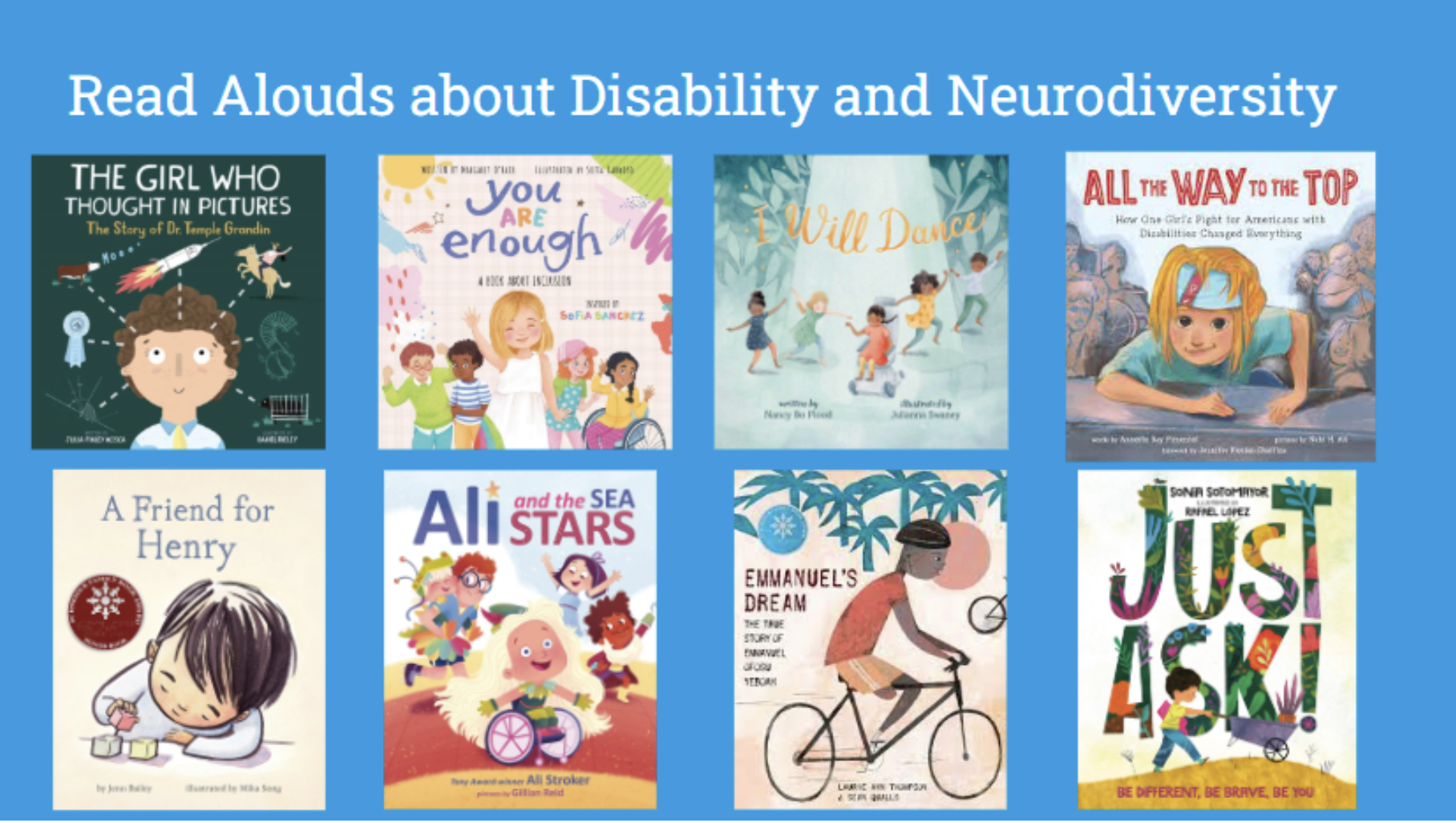
These books are mostly centered around either celebrating disability or the successes of people with disabilities, both of which I think are important to balance within your teaching about this topic. Some of these are utilized throughout the lessons I have created, and others are not.
Links to these books:
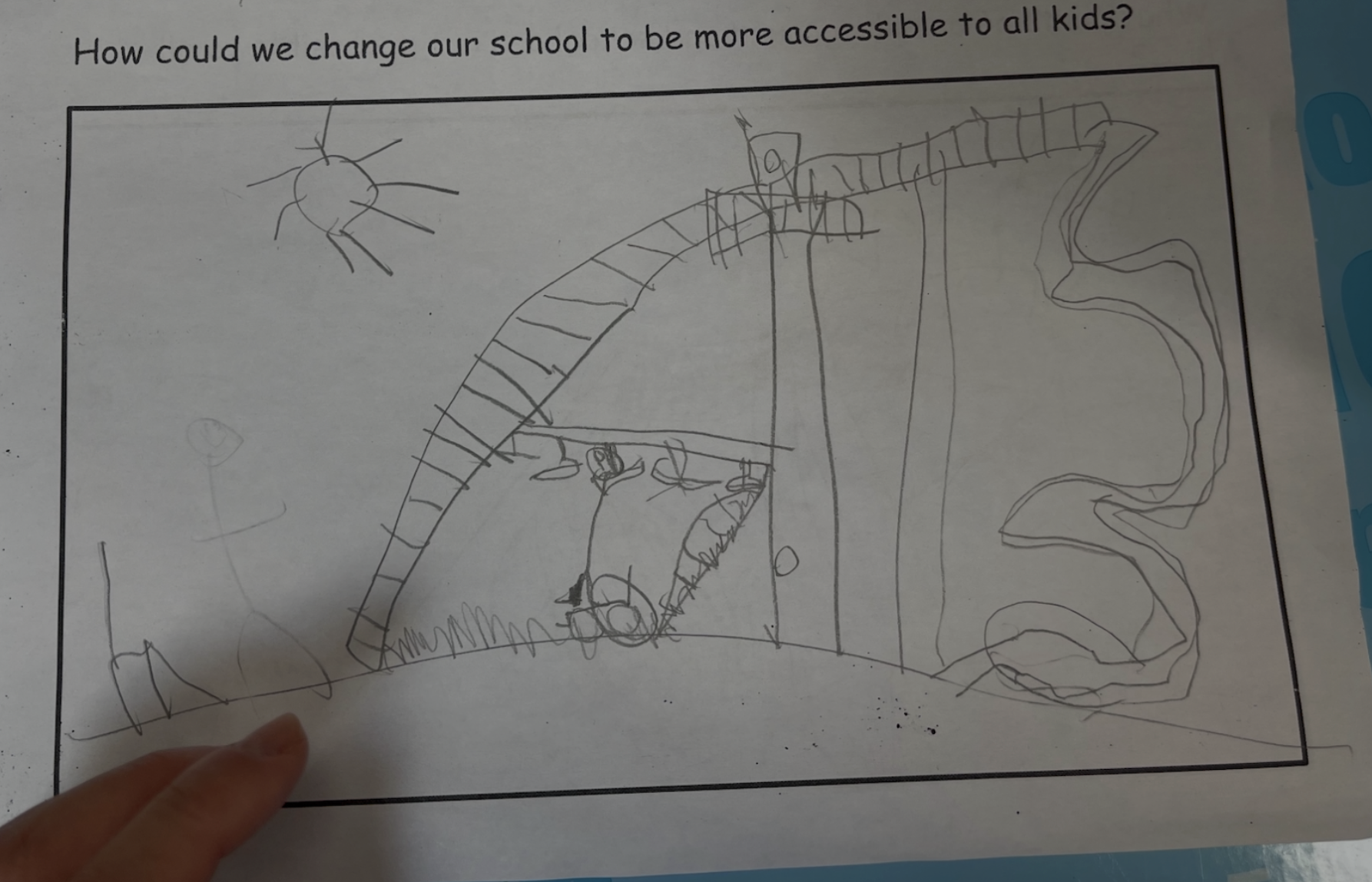
Building on what they learned in this unit, students also identified parts of the school playground that were not accessible to all kids and suggested designs that can be more accessible to all. The photos below show a student’s designs that reflected their evolving ideas of disabilities and accessibility and their agency in making changes for more inclusive and equitable participation.
 .
. 



 This site is primarily funded by the National Science Foundation (NSF) through Award #1907471 and #1315995